Short answer
Most of the time, no. Glaucoma usually causes no complaints early on, because damage starts in the outer parts of the visual field and the brain compensates for this loss for a long time. Symptoms such as visual field narrowing mostly appear once the disease has progressed. Glaucoma is therefore detected by screening and measurement, not by symptoms.
Whether glaucoma causes symptoms is a question that comes up more often especially during glaucoma awareness periods in March. Glaucoma, one of the most important causes of permanent vision loss worldwide, can often progress without symptoms in its early stage. For this reason, the disease is also described as the "silent thief of sight."
This condition, which arises from damage to the optic nerve due to increased intraocular pressure, can lead to irreversible vision loss if it goes unnoticed. Although glaucoma can be detected at an early stage today thanks to advanced diagnostic technologies, the most critical point is early detection of the disease.
What Is Glaucoma and How Does It Develop?
Glaucoma is a progressive disease that develops as a result of increased intraocular pressure (eye pressure) or of the optic nerve being sensitive to this pressure. The optic nerve is the main structure that carries visual information to the brain, and damage to this structure is permanent.
The main factors that play a role in the development of the disease are:
-
High intraocular pressure
-
Genetic predisposition
-
Advanced age
-
Risks related to the vascular structure
Not every case of high eye pressure necessarily means glaucoma; however, nerve damage is present in every glaucoma patient. For this reason, not only pressure measurement but also optic nerve and visual field analysis should be evaluated together.
Does Glaucoma Cause Symptoms?
The answer to the question of whether glaucoma causes symptoms is most often no. In the early stage the disease usually causes no complaints. Because vision can be preserved in the central area for a long time, the patient may not realize the condition.
Symptoms that may appear as the disease progresses:
-
Narrowing of the visual field
-
Loss of side vision
-
Decreased night vision
-
Involvement of central vision in the advanced stage
However, these symptoms usually appear once the disease has advanced. For this reason, glaucoma is detected not by symptoms but by screening and measurement.
Why Is Glaucoma a "Silent" Disease?
In glaucoma, damage begins in the outer areas of the visual field. The human brain can compensate for this loss for a long time. This delays recognition of the disease.
The table below summarizes the situation:
| Stage | Patient Awareness | Clinical Status |
|---|---|---|
| Early stage | None | Nerve damage begins |
| Intermediate stage | Mild | Visual field narrows |
| Advanced stage | Marked | Permanent vision loss occurs |
For this reason, the most important approach in glaucoma is not to wait for complaints but to have regular check-ups.
How Is Glaucoma Diagnosed?
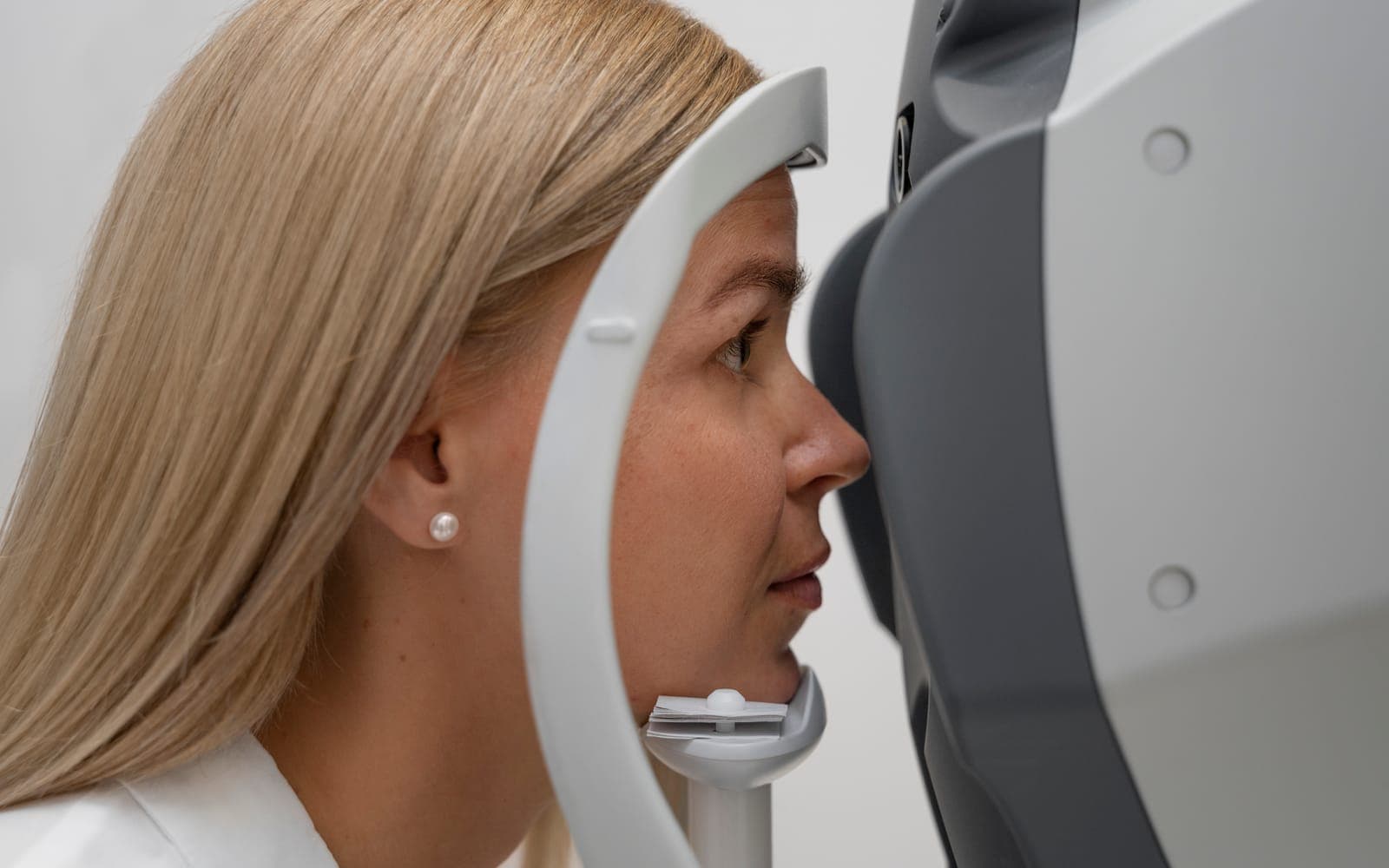
In modern eye disease practice, glaucoma is not diagnosed by measuring eye pressure alone. Thanks to advanced technologies, the disease can be detected at a much earlier stage.
The main diagnostic methods used:
-
Intraocular pressure measurement (tonometry)
-
Evaluation of the optic nerve head
-
Visual field test
-
Nerve fiber analysis with OCT (optical coherence tomography)
When these methods are evaluated together, glaucoma can be detected before symptoms even appear.
Why Is Glaucoma Awareness in March Important?
Glaucoma awareness activities held in March aim to draw attention to the importance of early diagnosis of the disease. This is because vision lost in glaucoma cannot be restored; however, with early diagnosis, the progression of the disease can be stopped.
Awareness periods are particularly important for the following people:
-
People over the age of 40
-
Those with a family history of glaucoma
-
Those with high eye pressure
Regular eye check-ups during this period are the most effective step in preventing vision loss.
Can Glaucoma Be Treated?
In glaucoma, the aim is not to reverse the damage that has occurred but to bring the progression of the disease under control. For this reason, early diagnosis is of great importance.
Treatment options:
-
Pressure control with eye drops
-
Laser applications
-
Surgical methods
Which treatment is applied is determined according to the stage of the disease and the patient's eye structure.
Frequently Asked Questions
Does glaucoma cause symptoms in the early stage?
Most often no. The disease usually progresses without symptoms.
Can glaucoma occur even if eye pressure is normal?
Yes. There is a form called normal-tension glaucoma.
Is glaucoma completely curable?
No. However, its progression can be stopped.
Does glaucoma lead to blindness?
If it is not diagnosed early, it can cause permanent vision loss.
The answer to whether glaucoma causes symptoms is most often silence. For this reason, recognizing the disease depends not on complaints but on regular eye examinations. With advanced diagnostic technologies and correct follow-up, glaucoma can be brought under control. The aim is not only to detect the disease but to preserve visual function in the long term.
You may also take a look at our article titled Glaucoma: The Silent Thief of Sight and the Importance of Early Diagnosis .
Scientific references
- Jayaram H, Kolko M, Friedman DS, et al.. Glaucoma: now and beyond. Lancet. 2023. PMID: 37742700
- Weinreb RN, Aung T, Medeiros FA. The pathophysiology and treatment of glaucoma: a review. JAMA. 2014. PMID: 24825645
- Wagner IV, Stewart MW, Dorairaj SK. Updates on the Diagnosis and Management of Glaucoma. Mayo Clin Proc Innov Qual Outcomes. 2022. PMID: 36405987