Short answer
Smart lens selection is not based on a single criterion but on several factors assessed together: the eye's anatomy, corneal features, presence of astigmatism, retinal health and the person's visual expectations. Preoperative measurements such as axial length and corneal curvature form the basis of planning. If there are retinal problems or corneal irregularities, these lenses may not be suitable.
How a smart lens is chosen is among the most critical questions for patients planning cataract surgery. Today, cataract surgery is not limited to removing the clouded lens; it is also a process in which how the patient will see after surgery is planned in advance.
Thanks to advanced measurement technologies and different lens options, the same treatment approach is no longer applied to every patient. In the planning of a smart lens (trifocal lens) in particular, a personalized choice is made by evaluating the structure of the eye and the patient's lifestyle together.
What Is a Smart Lens and Why Is It Different?
Smart lenses are lenses placed inside the eye during cataract surgery that can provide vision at more than one distance. Unlike conventional lenses, they support vision not at a single focus only, but at far, intermediate and near distances.
For this reason, they:
- May reduce dependence on glasses
- May increase comfort in daily life
- Provide versatile vision
However, these advantages are achieved only when the right patient is matched with the right lens.
What Factors Determine the Choice of a Smart Lens?
The choice of a smart lens is made not on the basis of a single parameter but by evaluating several factors together.
The most important criteria are:
- The anatomical structure of the eye
- Corneal characteristics
- The presence of astigmatism
- Retinal health
- The patient's vision expectations
Analyzing these factors together directly affects the quality of vision after surgery.
How Do Measurements Affect Lens Selection?
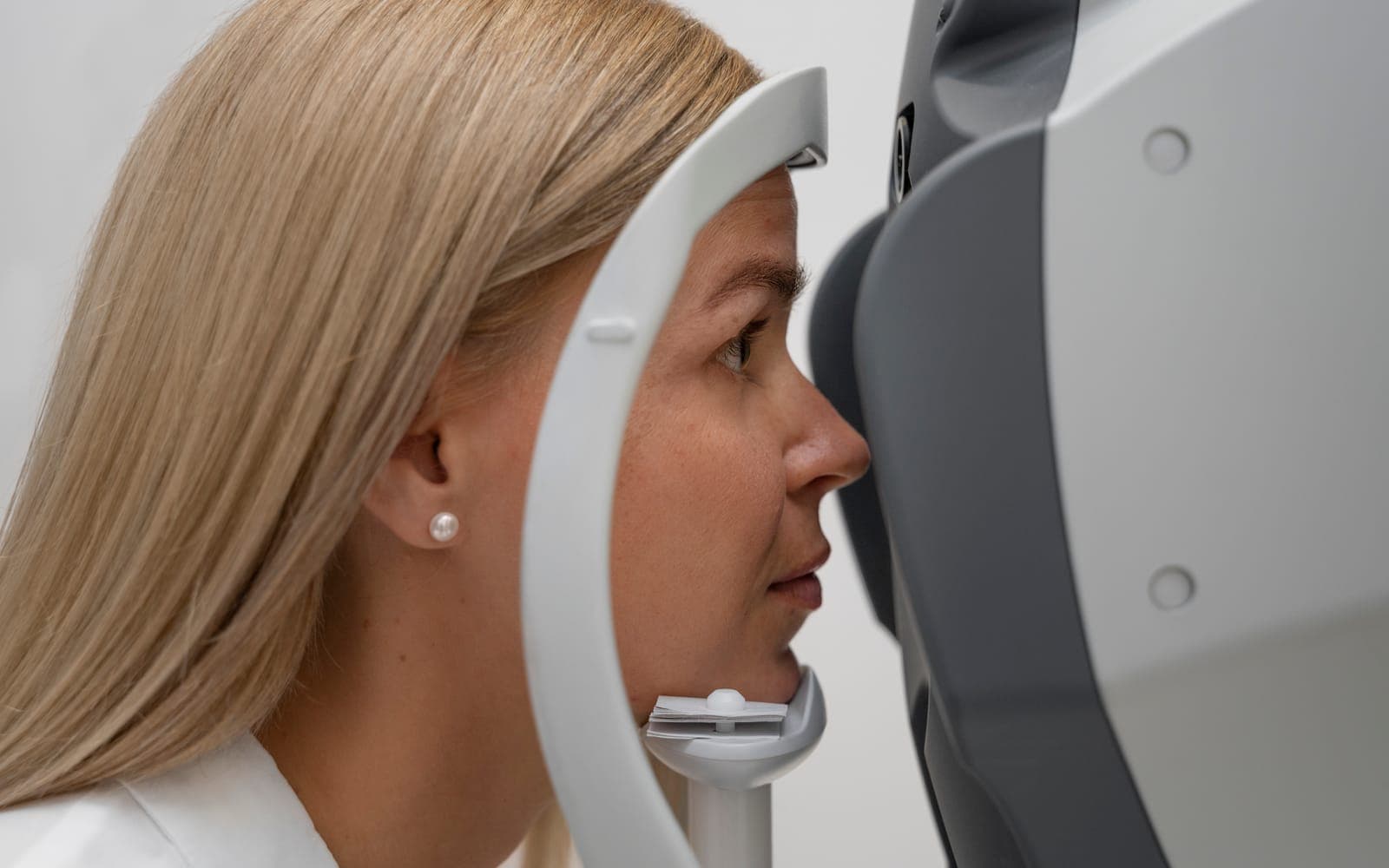
The measurements taken before surgery form the basis of smart lens planning. The right lens cannot be chosen without a detailed analysis of the length of the eye, the curvature of the cornea and the optical balance.
In this process:
- Axial length is measured
- Corneal curvature is evaluated
- Surface maps are produced
- The optical system is analyzed as a whole
Based on these data, the most suitable lens for the patient is determined.
(See: Which measurements change the outcome in cataract surgery?)
Is the Same Lens Suitable for Every Patient?
No. The choice of a smart lens is individualized.
In some patients these lenses may not be suitable, for example in the presence of:
- Retinal problems
- Corneal irregularities
- High expectations
In this case, other lens options may give a more accurate result. What matters is determining the solution that is most suitable for the patient.
Why Is the Patient's Lifestyle Important?
The choice of a smart lens is not made according to the structure of the eye alone. The patient's daily habits are also an important part of this process.
For example, the following people do not have the same vision needs:
- A person who uses a computer
- A person who drives
- A person who works at close range
For this reason, the patient's expectations must be clearly understood during the planning process.
What Problems Can the Wrong Lens Choice Cause?
The wrong lens choice can cause:
- A decrease in quality of vision
- Night vision problems
- Expectations not being met
For this reason, the decision process should not be rushed and a detailed evaluation should be made.
How Is Technology Improving Lens Selection?
The advanced measurement systems and calculation software in use today have made the lens selection process more precise.
Thanks to these systems:
- A more accurate lens power is determined
- Personalized planning is carried out
- Results become more predictable
When used correctly, technology becomes an important part of surgical success.
Frequently Asked Questions
Is the smart lens chosen the same way for everyone?
No. Every patient's eye structure and needs are different.
Can a wrong lens choice be corrected?
In some cases, an additional procedure may be needed.
How important are measurements in lens selection?
They are very critical. The right measurement means the right lens.
Do smart lenses completely eliminate the need for glasses?
In suitable patients they can reduce it considerably, but this is not guaranteed.
The answer to how a smart lens is chosen lies in considering the right measurement, the right analysis and the right patient evaluation together. Thanks to advanced technologies today, this process can be planned more precisely and personalized solutions can be offered.
Scientific references
- Chen JL, Al-Mohtaseb ZN, Chen AJ. Criteria for premium intraocular lens patient selection. Curr Opin Ophthalmol. 2024. PMID: 38920096
- Rampat R, Gatinel D. Multifocal and Extended Depth-of-Focus Intraocular Lenses in 2020. Ophthalmology. 2021. PMID: 32980397
- Tavassoli S, Ziaei H, Yadegarfar ME, et al.. Trifocal versus extended depth of focus (EDOF) intraocular lenses after cataract extraction. Cochrane Database Syst Rev. 2024. PMID: 38984608