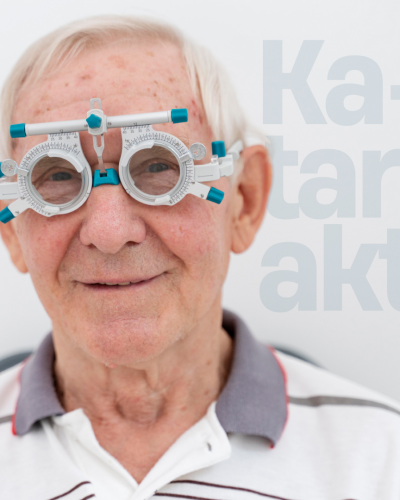
Cataract is an eye condition that results from the clouding of the natural lens, leading to vision loss, and is primarily associated with aging. However, it can also develop due to congenital factors, trauma, prolonged steroid use, or other eye diseases. Cataracts cause blurry vision, which can negatively affect daily life and, if left untreated, may progress to blindness.
What Are the Symptoms of Cataracts?
The most common symptoms of cataracts include:
• Blurry or cloudy vision
• Fading or yellowing of colors
• Increased sensitivity to bright lights
• Weakening night vision
• Double vision or shadowed vision
• Frequent changes in prescription glasses
These symptoms become more noticeable as cataracts progress, making daily activities more difficult.
When Is Cataract Surgery Necessary?
In the early stages of cataracts, symptoms may be mild, and temporary solutions like glasses may be used. However, when visual acuity decreases and daily life is affected, cataract surgery becomes inevitable. Cataract surgery is the only way to stop the progression of cataracts.
The Cataract Surgery Process
Before the Surgery:
Before the surgery, the doctor performs eye measurements to determine the choice of the artificial lens (intraocular lens - IOL). Additionally, the best lens options suitable for the patient’s lifestyle and visual needs are evaluated.
During the Surgery:
Cataract surgery is a procedure that takes about 15-30 minutes. It is performed under local anesthesia, and the natural lens of the eye is removed and replaced with an artificial lens. This artificial lens clears the vision by replacing the cloudy natural lens. The surgery is usually painless and is done through a small incision.
After the Surgery:
There may be some sensitivity in the eye for a few days following the surgery, but most patients can return to their daily activities within 1-2 days. It is important to use the prescribed eye drops regularly during the recovery process. Full recovery may take a few weeks.
Smart Lenses: Trifocal and EDOF Lenses
Trifocal Lenses:
Trifocal lenses are special artificial lenses implanted during cataract surgery, providing clear vision at three different distances (near, intermediate, and far). After cataract surgery, patients can see both far and near without glasses. Trifocal lenses significantly reduce the need for glasses in daily activities such as reading, using a computer, and driving.
EDOF Lenses (Extended Depth of Focus):
EDOF lenses offer extended depth of focus, providing clear vision at intermediate and far distances, thereby reducing the need for glasses. Compared to trifocal lenses, their performance at close distances may be limited. However, these lenses offer seamless vision, especially for intermediate and far-distance activities.
These lenses can be used not only in cataract surgeries but also in the treatment of presbyopia. Presbyopia is the age-related reduction in near vision, and these lenses help reduce the need for glasses in individuals with presbyopia as well.
Are There Risks in Cataract Surgery?
Cataract surgery is very safe, but like any surgical procedure, it carries some risks. Potential risks include infection, increased intraocular pressure, or retinal detachment. However, these risks are very low when postoperative care is followed.
Vision After Cataract Surgery
Most patients notice a significant improvement in their vision quality after surgery. However, it may take a few weeks for vision to fully clear. Patients who have trifocal or EDOF lenses implanted often enjoy life without glasses. However, in some cases, patients may still need glasses for specific activities, such as reading very small print.
Conclusion
Cataract surgery is an effective surgical procedure for treating cataracts, which cause vision loss. Thanks to advanced artificial lenses such as trifocal and EDOF lenses, patients can achieve clear vision for both near and far distances without the need for glasses after surgery. It is important to attend follow-up appointments and adhere to the recommended treatment plan to speed up the recovery process after surgery.
For healthy vision or to ask any questions you may have, feel free to contact us right away. We are here with the most suitable treatment options for you. To make an appointment, use the "Online Appointment" button, or for WhatsApp communication, click the "WhatsApp" button.
Contact
Internal Phone: 0 258 330 03 03
Mobile: 0 531 923 33 90 / 0 532 499 03 90
Prepared by: Prof. Dr. Cem Yıldırım