Short answer
YAG laser is used for posterior capsule opacification, which develops when the capsule behind the lens loses its clarity after cataract surgery. A controlled opening is made in the capsule so light can reach the retina, and no surgical incision is needed. Not every patient needs it; the decision is made by the ophthalmologist when the opacification clearly affects vision.
Many people whose vision becomes blurry again after cataract surgery assume that the cataract has come back. In most cases, however, the problem is not a new cataract. Posterior capsule opacification (PCO), which develops when the thin membrane behind the artificial lens placed inside the eye gradually loses its transparency, is commonly called "secondary cataract." The YAG laser treatment used in this situation is an effective, brief procedure that requires no surgical incision and is performed to clear the cloudiness and allow light to reach the retina clearly again.
There is, however, an important point: Not every patient who has had cataract surgery needs a YAG laser. The decision to treat is made by an ophthalmologist when posterior capsule opacification noticeably affects the quality of vision.
What Is YAG Laser Treatment?
The YAG laser, in full the Nd:YAG (Neodymium-doped Yttrium-Aluminum-Garnet) laser, is a specialized laser system that can be used for different purposes in eye diseases. It takes its name from the neodymium-doped YAG crystal that produces the laser light.
Today, its most common use is the treatment of posterior capsule opacification, which can develop after cataract surgery.
During cataract surgery, the clouded natural lens of the eye is removed. However, the thin capsule that holds the lens is left in place, and the artificial intraocular lens is placed inside this capsule.
Over months or years, this capsule may lose its transparency. As a result, the patient may start to see blurry again.
The YAG laser creates a controlled opening in this clouded capsule so that light can reach the retina unobstructed again. Medically, this procedure is called posterior capsulotomy.
What You Should Know
✔ The cataract does not come back.
✔ The structure that becomes cloudy is not the artificial lens.
✔ The YAG laser does not replace the lens.
✔ In most patients, the opening created by the laser does not close again.
Is a Secondary Cataract Really a Cataract?
No.
Although the term "secondary cataract" is widely used, medically speaking a new cataract does not form.
Because the natural lens is removed completely during cataract surgery, that same lens cannot develop a cataract again.
The problem is that the capsule behind the lens becomes hazy over time.
Therefore, the YAG laser:
- is not a new cataract surgery,
- does not replace the artificial lens,
- only creates a small opening in the clouded capsule.
For this reason, the procedure is a brief laser treatment that allows the existing artificial lens to provide clear vision again.
Why Does Posterior Capsule Opacification Occur?
After cataract surgery, the lens epithelial cells remaining on the capsule may continue to multiply over time.
These cells accumulate on the back surface of the capsule, disrupting the transparent structure and blocking the passage of light. As a result, the patient may start to see blurry again, similar to the complaints they had from the cataract before surgery.
This condition may develop:
- a few months after surgery,
- several years later,
- or even after a longer period.
It does not occur in every patient, and the time it takes to develop varies from person to person.
When Is the YAG Laser Used?
The YAG laser is used only when posterior capsule opacification affects vision.
The most common reasons are:
- Blurring of vision again
- Loss of clarity while reading
- Light scatter when driving at night
- Glare
- Reduced contrast sensitivity
- Posterior capsule opacity affecting vision on examination
The presence of opacity in the capsule alone is not enough to justify treatment. The impact on the patient's daily life and quality of vision is also assessed.
How Is YAG Laser Treatment Performed?
The procedure is performed in an outpatient setting and does not require a hospital stay.
It generally consists of the following steps:
- Drops that dilate the pupil are applied.
- The eye is prepared with anesthetic drops.
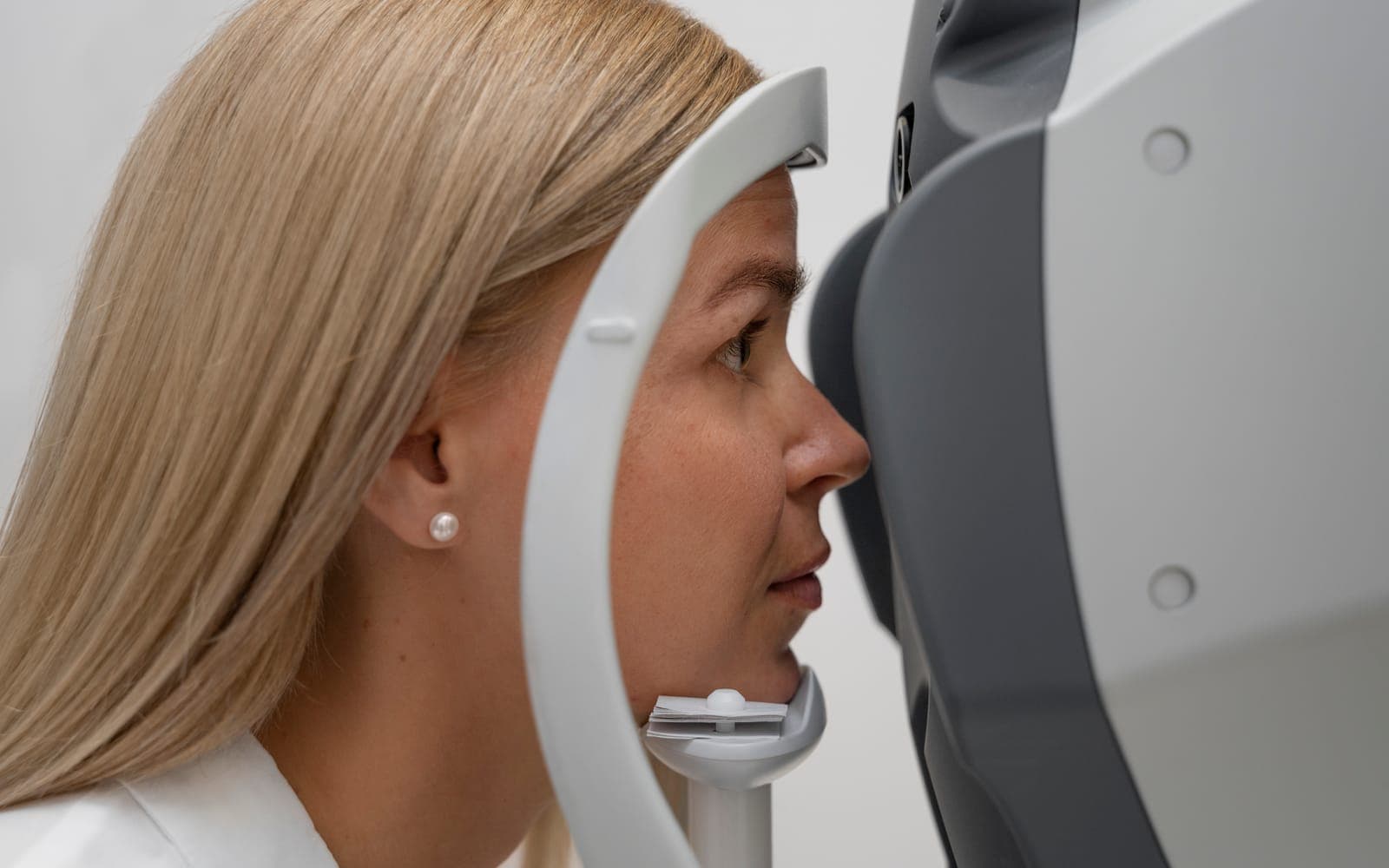
- The patient sits at the laser device.
- The eye is examined under a microscope.
- A controlled opening is created in the center of the posterior capsule with the YAG laser.
- The intraocular pressure may be checked after the procedure.
Most procedures are completed in about 5–10 minutes.
No surgical incision is made.
No stitches are used.
No bleeding is expected.
Is the YAG Laser Painful?
No.
Because the procedure is performed under drop anesthesia, most patients do not feel pain.
During the procedure you may experience, at most:
- brief flashes of light,
- faint clicking sounds,
- a minimal sensation of pressure.
When Does Vision Improve?
In many patients, vision begins to clear noticeably within the same day.
In some people, clarity may be reached within a few days, once the effect of the drops wears off.
During the first hours you may notice the following in your vision:
- mild blurriness,
- sensitivity to light,
- floating black spots (floaters).
Floaters result from small particles detached from the capsule during the laser being briefly visible inside the eye, and in most patients they decrease over time.
What Should You Pay Attention to After YAG Laser?
The eye drops recommended by your doctor should be used regularly after the procedure.
During the first days, care should be taken to do the following as advised:
- avoid rubbing your eye,
- not miss your follow-up examination,
- use the recommended drops.
Most patients can return to daily life the same day.
However, it is safer not to drive until your vision has fully cleared.
If unexpected symptoms such as sudden vision loss, intense flashes of light, a sensation of a curtain coming down or severe pain develop, you should see an eye doctor without delay.
Are There Possible Risks?
The YAG laser is one of the treatments that has been used safely in eye diseases for many years.
However, like any medical procedure, it may carry some risks.
Although rare, the following may develop:
- a temporary rise in intraocular pressure,
- inflammation inside the eye,
- a retinal tear,
- retinal detachment,
- macular edema,
- minor damage to the intraocular lens.
For this reason, intraocular pressure is measured in some patients after the procedure. The aim is to detect, at an early stage, any rise in pressure that may develop, even though this is rare.
Retinal complications are quite uncommon. However, follow-up is important because the risk may be somewhat higher, particularly in people with high myopia or those who have previously had a retinal disease.
May the YAG Laser Need to Be Repeated?
In most patients, a single session is enough.
The opening created by the laser does not close again.
In rare cases, however, an additional laser treatment may be needed because of tissue remaining around the opening.
This is not routine.
Differences Between YAG Laser and Cataract Surgery
| Feature | Cataract Surgery | YAG Laser Treatment |
|---|---|---|
| Structure treated | Clouded natural lens | Posterior capsule |
| Purpose | To remove the cataractous lens | To open the clouded capsule |
| Surgical incision | Yes | No |
| Stitches | May be needed | Not needed |
| Entry into the eye | Yes | No |
| Anesthesia | Drop anesthesia (usually) | Drop anesthesia |
| Procedure time | About 15–30 minutes | About 5–10 minutes |
| Hospital stay | Usually not required | Not required |
| Recovery | Days to weeks | Usually the same day or a few days |
When May the YAG Laser Not Be Used?
Not every complaint of blurred vision is due to posterior capsule opacification.
Sometimes the cause of reduced vision may instead be one of the following:
- age-related macular disease,
- diabetic retinopathy,
- retinal diseases,
- glaucoma,
- corneal diseases.
For this reason, the decision to use a YAG laser is not made on the basis of symptoms alone without a detailed eye examination.
Does Visual Quality Improve Permanently?
When posterior capsule opacification is treated successfully, vision remains clear for a long time in the majority of patients.
However, if the eye has diabetic retinopathy, glaucoma, age-related macular degeneration, or other retinal diseases, the level of vision is not determined by opening the capsule alone.
Therefore, the benefit gained from the procedure may vary depending on the overall health of the eye.
Frequently Asked Questions
Is the YAG laser another cataract surgery?
No. The YAG laser is not a surgical operation. It is a brief procedure in which a small opening is made in the clouded posterior capsule with a laser.
Is a secondary cataract really a cataract that has formed again?
No. The natural lens of the eye does not develop a cataract again. The problem is clouding of the capsule behind the lens.
How long does the procedure take?
It is usually completed within 5–10 minutes and does not require a hospital stay.
Does vision improve immediately?
In many patients, noticeable improvement begins within the same day. In some people, full clarity may take a few days.
Can I drive after YAG laser?
After the procedure, temporary blurriness may occur because of the effect of the drops. For this reason, it is recommended not to drive until your vision has fully cleared.
Can I take a bath or shower after YAG laser?
Yes. Unless your doctor advises otherwise, you can continue your daily personal hygiene and bathing routine after the procedure.
Can I use a phone or computer after YAG laser?
Yes. Once your vision has cleared, there is generally no problem using a phone, tablet or computer. If screen use is uncomfortable during the first hours because of temporary blurriness, a short rest may help.
Are eye drops used after YAG laser?
Yes. If the doctor considers it necessary, they may recommend using eye drops for a certain period after the procedure. The treatment plan may vary from patient to patient.
Is the YAG laser painful?
No. Because the procedure is performed under drop anesthesia, most patients feel only mild flashes of light and clicking sounds.
Scientific references
- Aydemir Sali T, Karahan E. Nd:YAG capsulotomy: an update. Med Hypothesis Discov Innov Ophthalmol. 2026. PMID: 42894709
- Grzybowski A, Kanclerz P. Does Nd:YAG Capsulotomy Increase the Risk of Retinal Detachment? Asia Pac J Ophthalmol (Phila). 2018. PMID: 30043556
- Schartmüller D, Schriefl S, Schwarzenbacher L, et al.. Posterior capsule opacification and Nd:YAG laser rates with two hydrophobic acrylic single-piece IOLs. Eye (Lond). 2020. PMID: 31485039