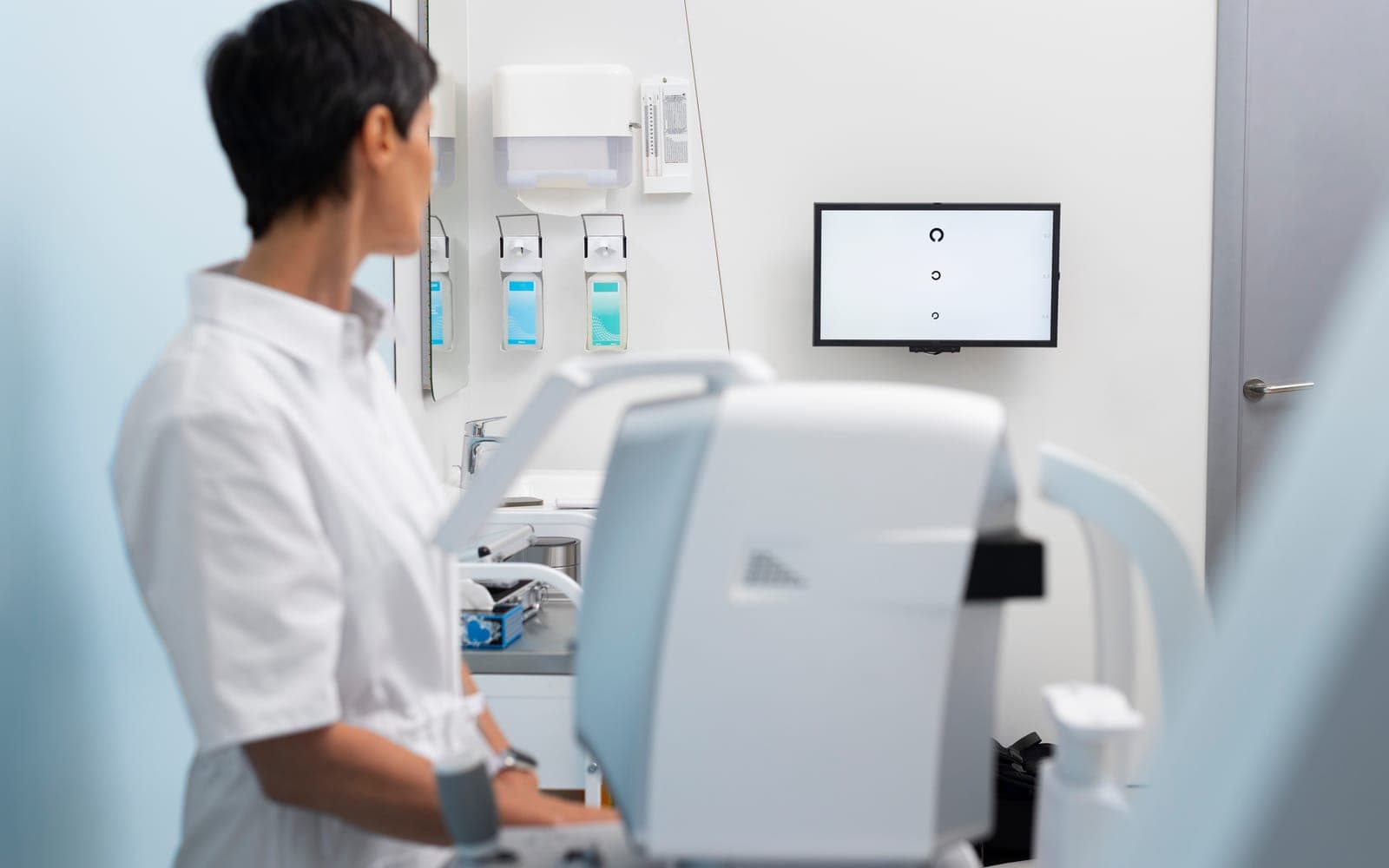
Short answer
The preoperative measurements that determine lens power and type change the result: axial length, keratometry, corneal topography, anterior chamber depth and other lens calculation parameters. A single measurement is not enough; they are assessed together. Wrong or incomplete measurements can leave residual refractive error after surgery and reduce visual quality.
Which measurements change the outcome in cataract surgery is a question of growing importance in modern eye surgery. Today, cataract treatment is not limited to removing the clouded lens; it also involves planning in advance the quality of vision the patient will have after surgery.
The advanced measurement technologies used at this point are among the most critical determinants of surgical success. In the planning of a smart lens (trifocal lens) in particular, the accuracy of the measurements directly affects the results. Today, patients expect not just to see, but to have comfortable vision without glasses. This makes measurement precision even more important.
Why Are Measurements So Important in Cataract Surgery?
The main goal of cataract surgery is not only to remove the clouding but also to provide clear and balanced vision. To achieve this goal, the measurements taken before surgery determine the power and type of the lens to be implanted.
Incorrect or incomplete measurement can cause:
- A residual refractive error after surgery
- A decrease in quality of vision
- Expectations not being met
For this reason, a significant part of surgical success today is shaped during the preoperative evaluation. In patients receiving premium lenses in particular, even small deviations can lead to vision problems noticeable in daily life.
Which Measurements Are Taken?
In modern cataract surgery, several parameters are evaluated together. The result of a single measurement is not sufficient.
The main measurements are:
- The front-to-back length of the eye (axial length)
- Corneal curvature (keratometry)
- Corneal topography
- Anterior chamber depth
- Lens calculation parameters
These data are analyzed with specialized software and the most suitable lens is selected. Today, these calculations are supported not only by standard formulas but also by advanced algorithms and databases.
Types of Measurements and Their Effects
| Measurement | What is it for? | Effect on the outcome |
|---|---|---|
| Axial length | Determines the length of the eye | Directly affects lens power |
| Keratometry | Measures corneal curvature | Determines clarity of vision |
| Topography | Produces a surface map | Shows irregularities |
| Anterior chamber depth | Affects lens positioning | Provides optical balance |
Evaluating these measurements together makes more predictable results possible. Instead of focusing on a single parameter, the whole system needs to be analyzed together.
The Role of Measurements in Smart Lens Planning
In smart lens (trifocal lens) applications, measurement precision becomes much more critical. This is because these lenses aim to provide vision at more than one focus.
For this reason:
- The corneal surface is analyzed in detail
- The presence of astigmatism is carefully evaluated
- The optical axis is determined precisely
Measurement errors can cause marked problems especially in near and intermediate vision. This is a factor that directly affects patient satisfaction after surgery.
How Does Technology Improve Measurement Accuracy?
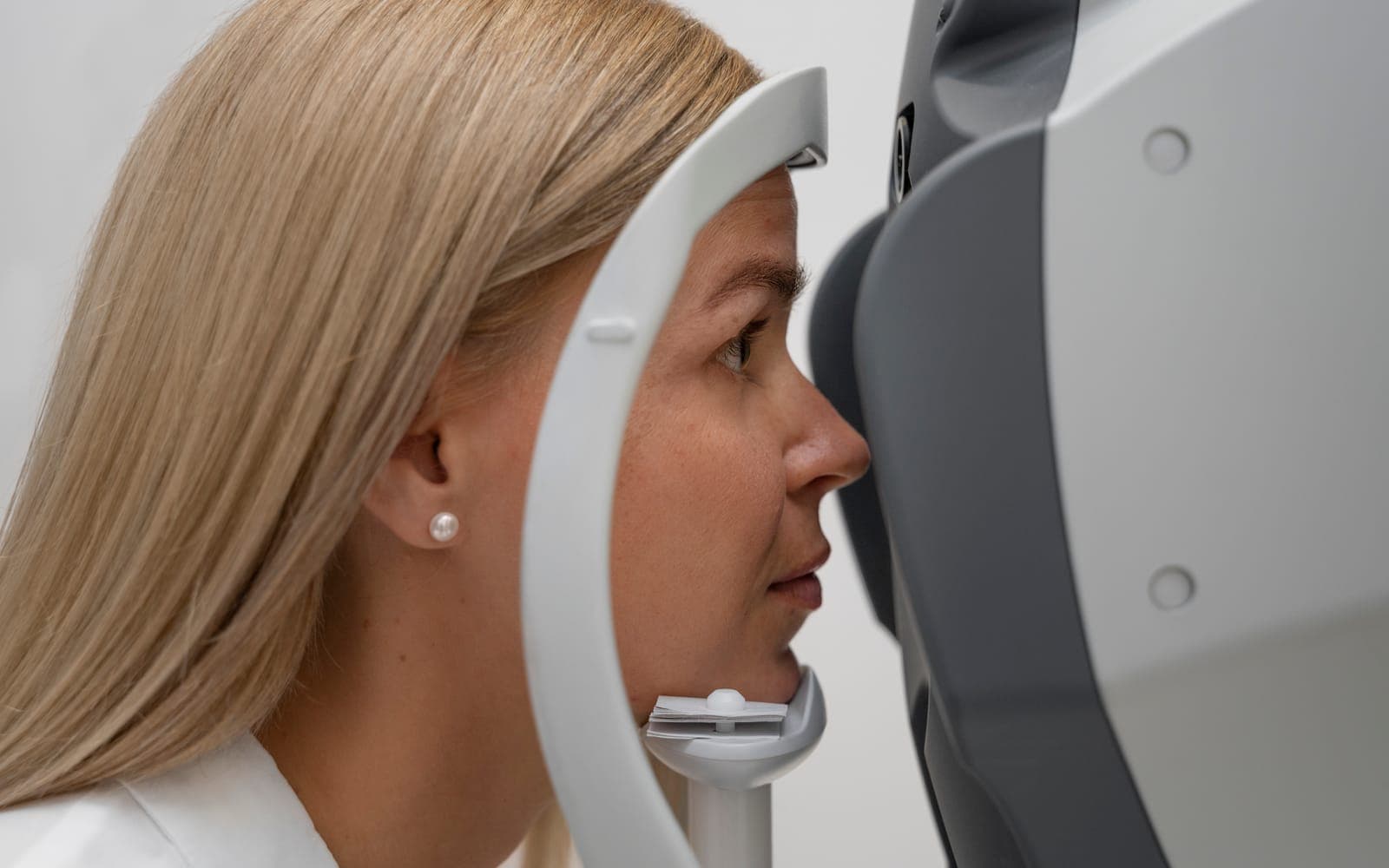
The advanced diagnostic systems in use today can perform non-contact, high-precision measurements.
Thanks to these systems:
- Human error is minimized
- Repeatable results are obtained
- A more reliable lens calculation is made
In addition, some systems combine different measurements on a single platform, offering a more holistic analysis. This allows more accurate decisions to be made, especially in patients with complex eye structures.
Why Do Measurement Errors Occur?
Not every measurement may give an accurate result. Some conditions can affect measurement quality:
- The presence of dry eye
- Corneal surface irregularities
- The patient being unable to focus during measurement
- Evaluation with a single device
For this reason, it is important to repeat measurements when necessary and confirm them with different methods. Measurements taken before the ocular surface has been stabilized in particular can be misleading.
(See: Is dry eye an obstacle to laser surgery?)
Right Measurement = Right Outcome
Success in cataract surgery does not depend only on the moment of surgery. The accuracy of the measurements taken before surgery directly determines the outcome of the operation.
Every eye is different, and a standard measurement approach may not be sufficient for every patient. For this reason, individualized evaluation and the use of advanced technology form the foundation of modern eye surgery. When planning is done correctly, cataract surgery becomes not just a treatment but a process that reshapes the quality of vision.
Frequently Asked Questions
Does a measurement error in cataract surgery affect the results?
Yes. An incorrect measurement can cause a residual refractive error after surgery.
Are measurements more important with smart lenses?
Yes. Precision is more critical with multifocal lenses.
Is a single measurement enough?
Generally not. Several measurements are evaluated together.
Does dry eye affect measurements?
Yes. The health of the ocular surface can affect measurement accuracy.
The answer to which measurements change the outcome in cataract surgery is clear: the right measurement, the right planning and the right lens choice must be considered together. Thanks to advanced technologies today, this process can be managed far more precisely and patient-specific solutions can be produced.
Scientific references
- Kane JX, Chang DF. Intraocular Lens Power Formulas, Biometry, and Intraoperative Aberrometry: A Review. Ophthalmology. 2021. PMID: 32798526
- Gupta V, Pal H, Sawhney S, et al.. Optimization of biometry for best refractive outcome in cataract surgery. Indian J Ophthalmol. 2024. PMID: 38131567
- Savini G, Taroni L, Hoffer KJ. Recent developments in intraocular lens power calculation methods-update 2020. Ann Transl Med. 2020. PMID: 33313298