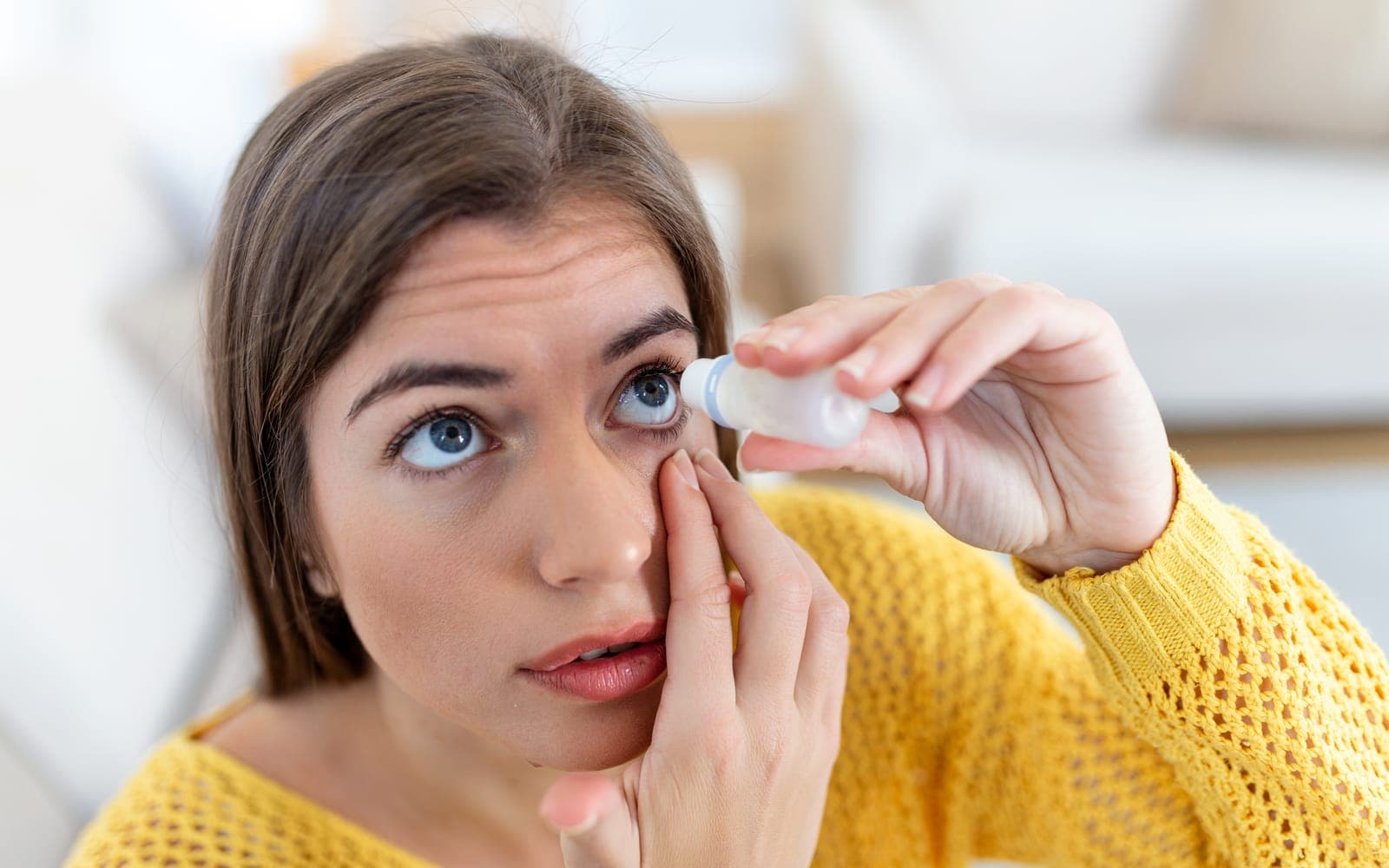
Short answer
There are drops that can help with near vision without glasses, but the effect is temporary. They slightly narrow the pupil to make near focusing easier and usually last 4 to 6 hours. Blurring, headache or light sensitivity can occur. They are not suitable for everyone and cannot be said to remove the need for glasses entirely. Long-term frequent use is not recommended; they should be used under an eye doctor's supervision.
One of the most frequently asked questions lately is this:
"Doctor, can we see up close without glasses using eye drops?"
Presbyopia (difficulty with near vision), which appears with age, is a natural process that affects the daily life of many people. FDA-approved eye drops containing aceclidine, which have come to attention in recent years, stand out as a promising development in this area.
How Do These Drops Work?
These drops slightly constrict the pupil, making it easier to focus on objects at near distance.
Their effect generally begins shortly after instillation and lasts a few hours.
However, one important point must not be forgotten:
These drops do not offer a permanent solution; they only provide temporary clarity.
Are They Suitable for Everyone?
No. The structure of the eye, existing refractive error, age and accompanying diseases determine the effect of these drops.
While some people get a satisfactory result, others may experience side effects such as blurriness, headache or light sensitivity.
For this reason, the right decision for each patient should be made after an examination.
Alternative Options
-
Smart lens applications
-
Laser treatments
-
Multifocal glasses or contact lens options
Each addresses different needs and is applied on an individual basis with proper planning.
Frequently Asked Questions
1️⃣ How long does the effect last?
It generally improves near vision for 4–6 hours. However, the duration may vary from person to person.
2️⃣ Can they be used every day?
Long-term and frequent use is not recommended. They should be used under the supervision of an eye doctor, at a frequency tailored to the individual.
3️⃣ Who are they not suitable for?
They should be used with caution in people with elevated eye pressure, retinal disease or chronic dry eye.
4️⃣ Can I drive after using them?
Since some people may experience light sensitivity or temporary blurriness, driving immediately after instillation is not recommended.
Conclusion
Eye drops can provide temporary comfort for near vision problems;
however, it would not be correct to say "glasses are no longer needed."
✨ In eye health there are no miracles, but the right choices tailored to the individual.
Scientific references
- Grzybowski A, Kapitanovaite L, Zemaitiene R. An updated systematic review of pharmacological treatments for presbyopia. Adv Ophthalmol Pract Res. 2024. PMID: 39512930
- Grzybowski A, Ruamviboonsuk V. Pharmacological Treatment in Presbyopia. J Clin Med. 2022. PMID: 35268476
- Waring GO, Price FW, Wirta D, et al.. Safety and Efficacy of AGN-190584 in Individuals With Presbyopia: The GEMINI 1 Phase 3 Randomized Clinical Trial. JAMA Ophthalmol. 2022. PMID: 35238902