Short answer
SMILE Pro is mainly considered for adults with myopia and myopic astigmatism. Suitability depends not on the prescription alone but on corneal thickness and shape, the ocular surface and overall eye health. Suspected keratoconus, too little corneal tissue or an unstable prescription may make it unsuitable. The decision is made after examination.
SMILE Pro is a method considered for adults with myopia and myopic astigmatism, but suitability is not decided by the prescription alone. The structure of your cornea, the health of your eye surface and whether your prescription is stable are all assessed together. This becomes clear after an examination and differs from person to person.
Which refractive errors is SMILE Pro considered for?
The literature describes SMILE as a treatment for myopia and myopic astigmatism. It is based on removing a piece of corneal tissue (a lenticule) from inside the cornea without creating a flap. Reviews report safety, efficacy and predictability similar to LASIK and to surface-based techniques. SMILE Pro is the current platform that applies this principle with a femtosecond laser; an excimer laser is not used.
The method can also be used in eyes with astigmatism, and a meta-analysis has pooled studies on vision and astigmatic correction in high astigmatism. However, under-correction of astigmatism has been reported, so surgeons need to plan carefully in people with astigmatism.
What does a suitable candidate look like?
Doctors generally look for the following:
- Myopia or myopic astigmatism, with a prescription that has not been increasing for some time.
- A cornea of sufficient thickness whose tomography looks regular.
- A healthy eye surface, with any dry eye under control.
- No condition that could rule out laser surgery, such as glaucoma, cataract, or retinal or corneal disease.
- The ability to follow instructions around surgery and realistic expectations.
Who may not be suitable for SMILE Pro?
In the situations below, the method may be unsuitable or another option may be preferred. In each case the decision is individual:
- Keratoconus or suspected keratoconus: In this condition the cornea thins and bulges forward, and laser surgery can increase the risk of ectasia.
- Unstable prescription: If the prescription is still changing, the result becomes hard to predict.
- Insufficient corneal tissue: If too little cornea would remain after the tissue is removed, the method is not advised.
- Corneal disease or scarring: Existing corneal problems can affect the laser plan.
- Severe dry eye: The eye surface should be treated first.
- Pregnancy and breastfeeding: Hormonal changes can affect the prescription, so surgery is usually postponed.
Why does suspected keratoconus matter so much?
Excessive weakening of the cornea after laser surgery (ectasia) is a serious complication, and keratoconus that goes unnoticed before surgery is an important cause. Corneal tomography devices such as the Pentacam help to detect early signs, but the literature notes that no single screening protocol has been established. For this reason tomography, thickness maps and, when needed, further measurements are interpreted together. You can find more in our articles on hidden keratoconus and laser surgery and corneal tests before laser eye surgery.
What if you wear contact lenses or orthokeratology lenses?
Orthokeratology lenses can temporarily change the shape and thickness profile of the cornea. Reviews note that most of these changes return to baseline after the lenses are stopped, and that the time this takes varies between people. For this reason lens wear is stopped for a period so that measurements can settle. For general guidance, see stopping contact lenses before laser surgery.
What if the prescription is very high?
A high prescription is not an obstacle in itself, but because more tissue must be removed, corneal thickness becomes decisive. If the cornea is not sufficient, options such as an intraocular lens may be discussed. You can read about the choices in options for high myopia.
Your expectations are part of suitability too. Laser surgery aims to reduce dependence on glasses or lenses; it does not mean the prescription will always reach zero. Reading glasses may also become necessary with age, and laser cannot prevent that. These points should be discussed openly with your doctor.
What is assessed in the suitability examination?
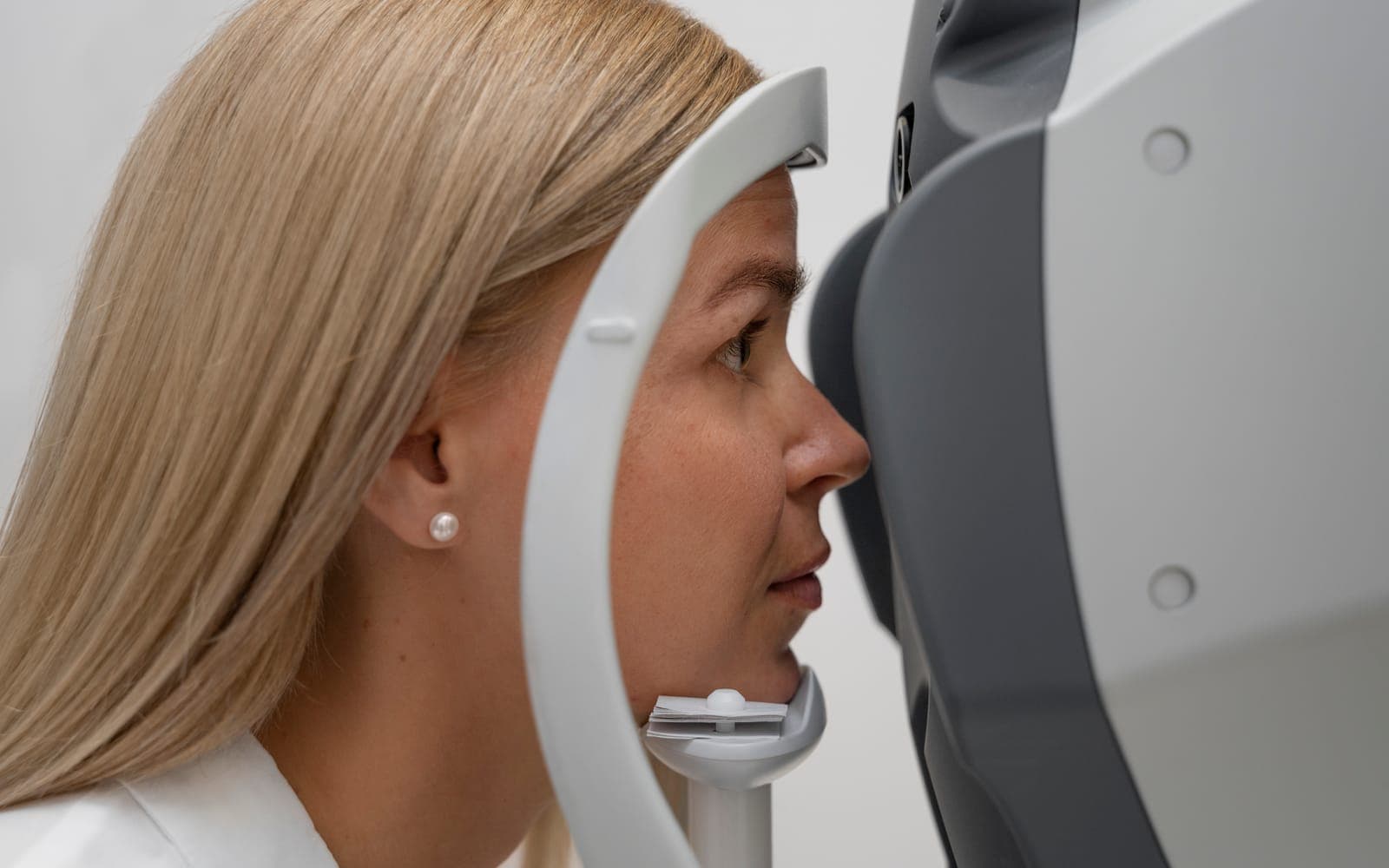
No single test is enough to decide suitability. The doctor asks about your glasses and contact lens history, how your prescription has changed and your general health. Corneal tomography, thickness measurement, assessment of the ocular surface and tears, eye pressure and a dilated retinal examination usually follow. These findings are interpreted together. In some cases measurements need to be repeated, which is a routine step to make sure the results are reliable. For details of the process, see the SMILE Pro pre-operative exam and preparation.
At the end of the examination you are told whether the method seems suitable, whether it should be postponed, or whether another option should be considered. Risks and expected results are discussed openly at this visit. No guarantee of outcome is given, because every eye heals differently.
Frequently Asked Questions
Can I have SMILE Pro if I am older?
Age alone does not decide. The general health of the eye, any early cataract and your near-vision needs are assessed together.
Is SMILE Pro suitable for low myopia?
In low myopia the lenticule to be removed is thin, which can make the technique more demanding. Your doctor will weigh this against other methods.
Can I not have surgery if I have dry eye?
Mild, well-controlled dry eye is often not a barrier, while severe dry eye is treated first. Dry eye is assessed separately during pre-operative screening.
If I am told I am not suitable, do I have no options?
No. Alternatives such as PRK, other laser methods or intraocular lenses exist, and your doctor will explain which may suit you after the examination.
Scientific references
- Titiyal JS, Kaur M, Shaikh F, et al.. Small incision lenticule extraction (SMILE) techniques: patient selection and perspectives. Clin Ophthalmol. 2018. PMID: 30233132
- Motlagh MN, Moshirfar M, Murri MS, et al.. Pentacam Corneal Tomography for Screening of Refractive Surgery Candidates: A Review of the Literature, Part I. Med Hypothesis Discov Innov Ophthalmol. 2019. PMID: 31598520
- Wang VM, Moin KA, Hoopes PC, et al.. Corneal Refractive Surgery Considerations in Patients With History of Orthokeratology. Eye Contact Lens. 2025. PMID: 39508787
- Cui G, Di Y, Yang S, et al.. Efficacy of small-incision lenticule extraction surgery in high astigmatism: A meta-analysis. Front Med (Lausanne). 2022. PMID: 36743675